
Identifying and Managing Late Trigger Dyssynchrony
- Dr. Sateesh Chandra Alavala

- Oct 30, 2025
- 1 min read
Updated: Nov 4, 2025
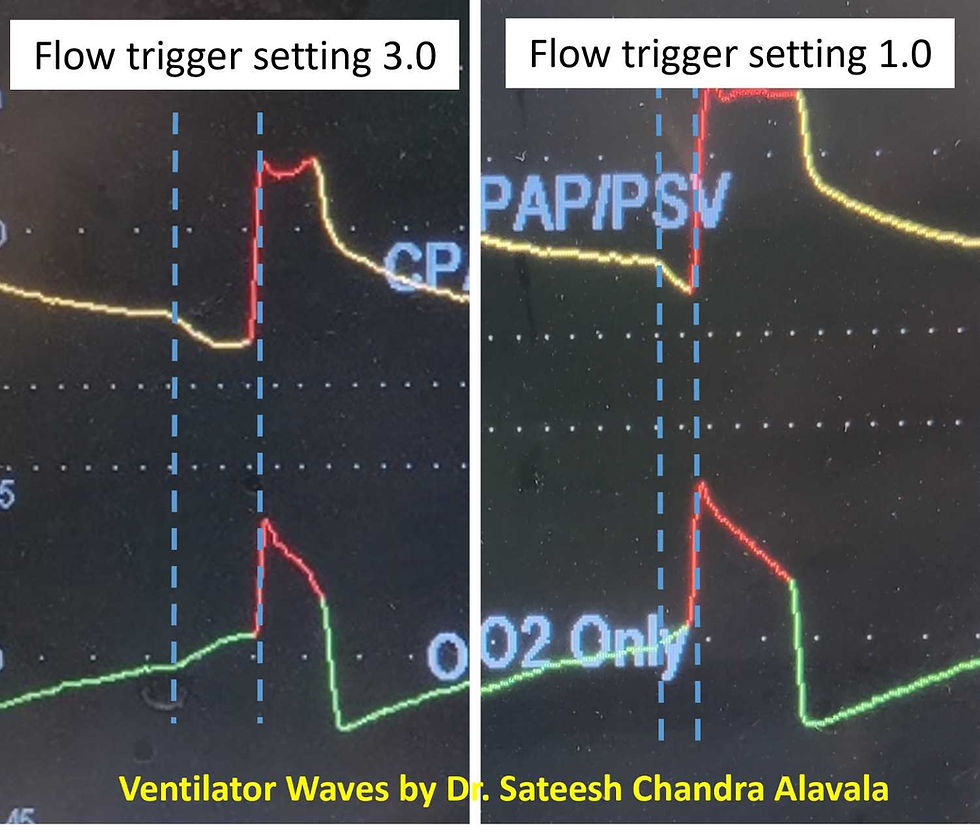
A pressure drop below baseline marks the start of the patient’s neural inspiratory effort. When there is a noticeable delay between this effort and the ventilator delivering flow—typically more than 100 milliseconds—it is referred to as delayed or late triggering. One common cause of delayed triggering is a high trigger sensitivity threshold, requiring the patient to generate more effort to initiate a breath.
In this example, the trigger sensitivity (flow trigger) was initially set at 3, resulting in a visible lag between the patient’s effort and ventilator assistance. After adjusting the trigger sensitivity to 1 (a more sensitive trigger setting), the delay shortened, allowing the ventilator to respond promptly and deliver flow in synchrony with the patient’s neural effort.




Comments