
Two Neural Efforts for One Mechanical Breath

Updated: Nov 5, 2025
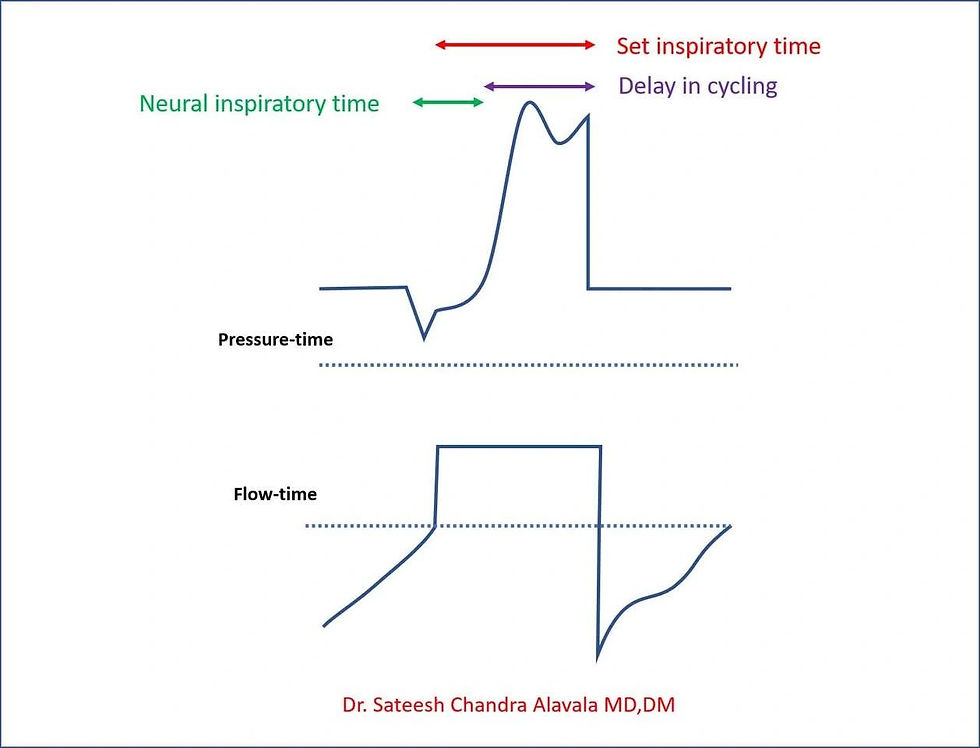
Work shifting: During the initial phase of inspiration, the pressure is lower than the set Positive End-Expiratory Pressure (PEEP). This is a result of the patient's strong inspiratory effort (Pinsp mus).
Late cycling (delayed cycling): As the inspiratory muscles relax, the pressure waveform rises above the baseline. Some patients may engage their expiratory muscles to actively facilitate the expulsion of air from the lungs, leading to a sharp increase in pressure.
The patient completes a full respiratory cycle (inspiration and expiration) and promptly begins another cycle within the designated inspiratory time. This can be identified by the pressure drop in the latter half of the inspiratory phase. This situation arises when the spontaneous RR is much higher than the set RR or the set inspiratory time is much longer than the neural inspiratory time.
At the onset of the inspiratory phase, a slight bump in the flow-time scalar can be observed. This is due to the ventilator delivering pressure support in a volume control breath, providing additional flow to meet the patient's respiratory needs.




Comments