
Consequences of Improper Ventilator Settings
- Dr. Sateesh Chandra Alavala

- Nov 1, 2025
- 1 min read
Updated: Nov 5, 2025
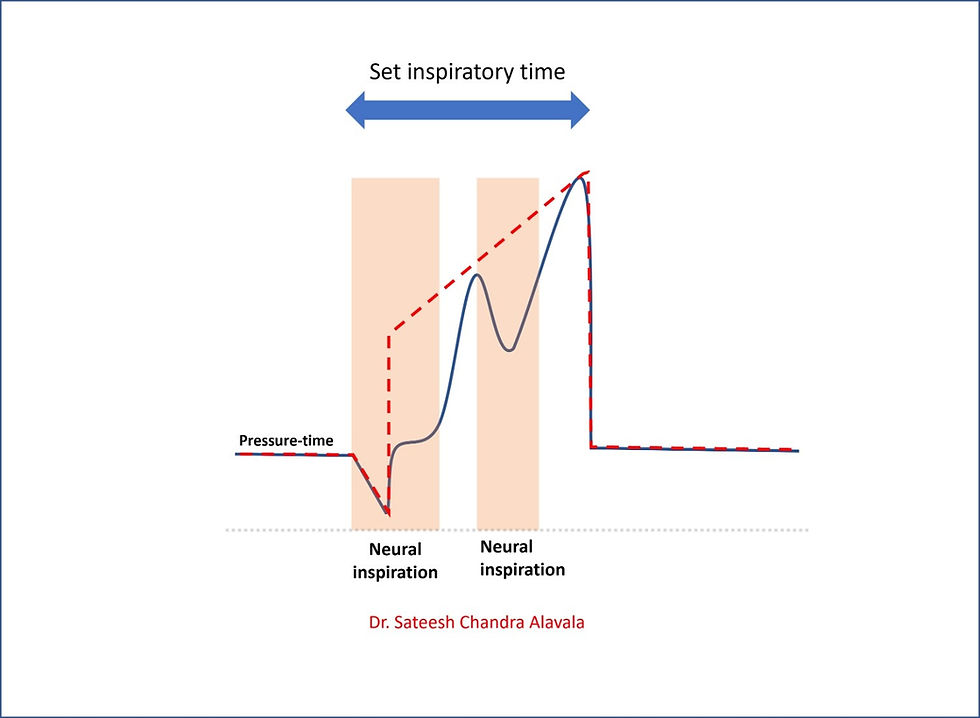
These waveforms illustrate multiple patient–ventilator dyssynchronies, highlighting the consequences of inappropriate ventilator settings.
In the pressure–time scalar, immediately after the breath is triggered, the airway pressure drops to the level of PEEP, indicating a strong inspiratory effort and significant work shifting from the ventilator to the patient. This is followed by a steep rise in pressure, which reflects inspiratory muscle relaxation and expiratory muscle contraction, a pattern consistent with late (delayed) cycling. A notch in the pressure-time scalar during late inspiratory phase indicates another inspiratory effort by the patient. We can also notice patient's attempt to breath during the expiratory phase resulting in failed trigger.
Overall, the patient’s spontaneous respiratory respiratory rate is much higher than the set ventilator respiratory rate, leading to situations where the patient attempts to take two neural breaths within a single mandatory ventilator breath. This commonly occurs when the set respiratory rate is too low for a patient in respiratory distress, forcing the patient to compensate and producing significant dyssynchrony.




Comments